
Speechbox / Planning
How Many Speaker Kits?
A speaker kit is a personal page for one person from one session, with their clips and quote cards ready to post. This guide shows how to count kits from your agenda. The first page is usually enough.
Start here
The rule in one line
One kit for every person you want to promote, in every session they speak in.
Count people, not sessions
A keynote is one kit. A panel of three is three kits.
A session with nobody you want to promote needs no kit.
Count the guest, not the host
When one person interviews another, the kit goes to the person answering the questions.
If the host is also a known name in your industry, it is a conversation between two experts, and both get a kit.
Count each session separately
Someone who gives the opening keynote and later joins a panel gets two kits.
Each kit holds what they said in that one session.
A kit exists to be posted. If a person would share it with their own network, count them. If they would not, leaving them out costs the event nothing.
Part one
What a speaker kit is
A speaker kit is a branded page made for one person, from one session recording. You send them the link, and they post from it.
- Their highlight clips, in vertical and widescreen.
- Quote cards built from their own words.
- Written posts they can publish as they are or edit first.
- The full session recording, if you choose to include it.
Every kit a speaker posts puts your event in front of their network, with your branding on it. That is why the count follows the people who will share, not the length of the agenda.
Every recorded session produces clips, quote cards and articles for the event itself, whether or not anyone in it gets a kit. Kits are for the people you want to promote personally.
Part two
Counting by session format
Find each session on your agenda in this table and add up the kits.
| Session format | Kits | Why |
|---|---|---|
| Keynote or solo talk | 1 | One person, one kit. |
| Fireside chat with a host and a guest | 1, for the guest | The guest is the person the audience came to hear. |
| Conversation between two experts or two sponsors | 2 | Both people are there to be seen, and both have a network to share with. |
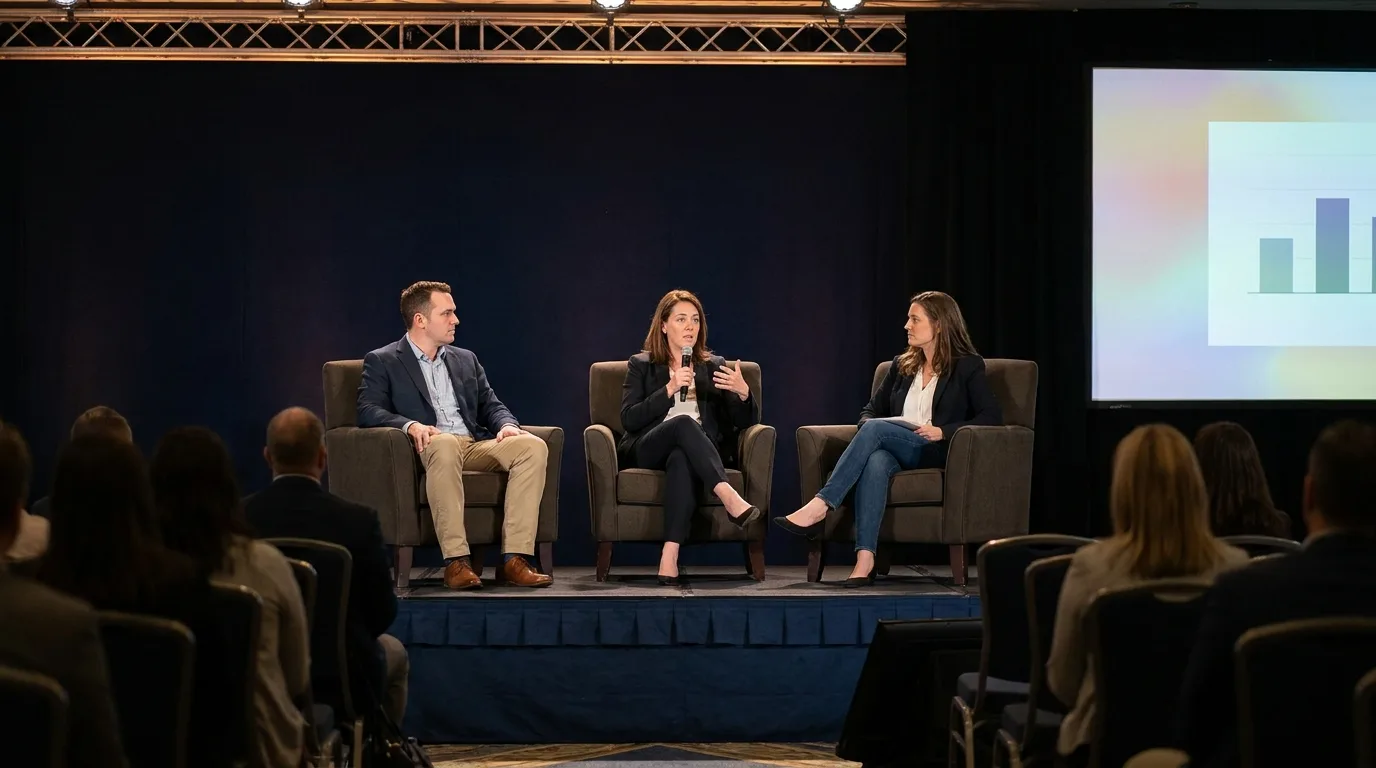
| Panel | 1 per panellist | The moderator counts like a host, unless they are also a known name in your industry. |
| Sponsor pitch or spotlight session | 1 per presenter | Each person on stage gets a page of their own to share. |
| Workshop with co-presenters | 1 per presenter | Counted like a panel without a moderator. |
| Audience questions, an MC introducing speakers | 0 | Their voices are in the recording, but nobody needs a page for them. |
Part three
Two worked examples
A keynote and a fireside chat
The agenda has two sessions. One is a keynote with a single speaker. The other is a fireside chat with two people on stage.
| Session | Who is on stage | Kits |
|---|---|---|
| Keynote | One speaker | 1 |
| Fireside chat | A host interviewing a guest | 1 |
| Total | 2 |
If the fireside chat is a conversation between two industry experts, or between two paid sponsors, both people get a kit and the total is 3.
A one-day conference
| Session | Who is on stage | Kits |
|---|---|---|
| 09:00 Opening keynote | Your headline speaker | 1 |
| 10:00 Panel | A moderator and three panellists | 3 |
| 11:30 Sponsor spotlight | Six ten-minute pitches, one presenter each | 6 |
| 14:00 Fireside chat | A journalist interviewing the headline speaker from the morning | 1 |
| 16:30 Closing | The MC thanking the day's speakers | 0 |
| Total | 11 |
- The headline speaker is counted twice: once for the keynote, once for the fireside chat.
- The moderator and the journalist are hosts, so neither is counted.
Part four
Cases that change the count
The same person in two sessions
Two kits, one page for each session.
A speaker who is never on camera
A voice with nobody on screen cannot be matched to a face, so we cannot build a kit for that person.
Worth knowing: a moderator who sits off stage falls into this case. Keeping them in the frame fixes it.
Panels of four or more
Still one kit per panellist. The Capture Guide shows how to frame a large panel.
Deciding after the event
You do not have to settle every kit up front. A kit can be added later from the same recording, for anyone the camera shows. Start with the people you are sure about.
Part five
What to send us
The agenda is the whole brief. Mark the people who get a kit, and we take it from there.
- The final agenda with session times and titles.
- Every kit holder's full name, spelled correctly, with job title and company. Names go on a public page, so a misspelling is public.
- Headshots if you already have them. Optional, but they make a better kit than a frame from the video.
Send us the agenda and we will count it with you before the quote.
How to record the sessions themselves is covered in The Capture Guide.