AI Video Analysis Platform Explained
Sam
Content Writer, Speechbox
What an AI Video Analysis Platform Is
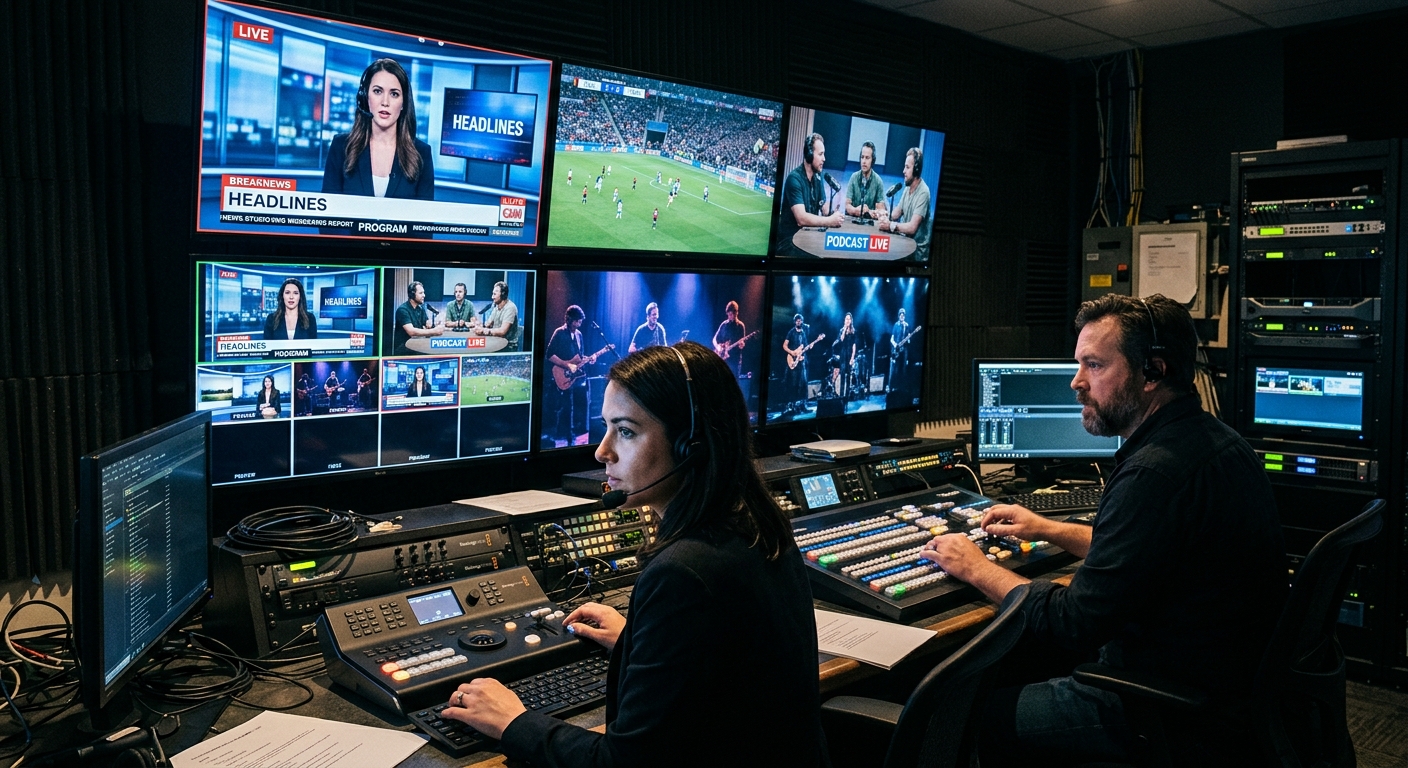
Short answer: An AI video analysis platform is software that processes video automatically at scale - transcribing, identifying speakers, reading on-screen text, detecting topics, and generating reusable assets like clips and quotes. The purpose-built version for production teams is called a video intelligence engine. The terms describe the same category of product.
Definition: A video intelligence engine is a purpose-built system that processes video content at scale - extracting structured data, identifying speakers, detecting visual context, and producing publishable assets automatically. Unlike general-purpose AI tools adapted for video, a video intelligence engine is designed from the ground up for video-native workflows: broadcast, events, and podcast production.
In Context
Video teams at TV channels, event companies, and podcast networks don't need another AI tool. They need infrastructure that understands their footage - who's speaking, what's on screen, what topics are covered - and turns that understanding into outputs they can use immediately.
A video intelligence engine does this as a single system, not a collection of stitched-together services. It combines transcription, speaker detection, visual analysis, data extraction, and asset generation into one pipeline tuned to a specific organization's content, terminology, and brand rules.
The word "engine" matters. This isn't a dashboard you log into. It's a system that runs inside your environment, processes your footage, and delivers structured outputs to your existing tools - CMS, MAM, social platforms, internal search.
Raw Video
Any format, any length
Transcription
Multi-speaker, jargon-aware
Speaker Detection
Cross-archive recognition
Visual Intelligence
On-screen context
Data Extraction
Structured entities
Asset Generation
Publish-ready outputs
Raw Video
Any format, any length
Transcription
Multi-speaker, jargon-aware
Speaker Detection
Cross-archive recognition
Visual Intelligence
On-screen context
Data Extraction
Structured entities
Asset Generation
Publish-ready outputs
What a Video Intelligence Engine Does
A video intelligence engine operates across five layers simultaneously:
Transcription
Multi-speaker, jargon-aware speech-to-text. Handles overlapping dialogue, accented speech, and domain-specific vocabulary. Accurate enough to publish.
Speaker Detection
Identifies who is speaking and recognizes returning speakers across your entire archive. Enables per-speaker search and speaker kits.
Visual Intelligence
Reads lower thirds, graphics, scene transitions, and on-screen text. Audio-only systems miss half the story.
Data Extraction
Pulls structured entities: people, organizations, topics, locations, timestamps, chapters. Exports via CSV, JSON, or API.
Asset Generation
Produces clips, quote cards, highlights, social posts, and session pages - formatted to your brand guidelines. No manual editing.
Each layer feeds the next. The engine doesn't just transcribe and stop. It builds a complete, structured dataset from every piece of footage - and that dataset compounds as your archive grows.
How It Differs from Generic AI Tools
Most AI tools available today were built for text, then adapted for video as an afterthought. The result: they handle transcription reasonably well but miss everything else.
Generic AI Tool
- Built for text, images, general tasks
- Basic or no speaker handling
- Visual context ignored entirely
- Vendor cloud only - no deployment control
- No brand rule support
- Raw transcript or basic summary output
- Static, per-file processing
Video Intelligence Engine
- Purpose-built for video-native workflows
- Full speaker identification, cross-archive recognition
- Visual context extracted and indexed
- Deploys in your environment (VPC, on-prem)
- Brand rules built into the pipeline
- Structured data + publishable assets
- Compounds across your entire library
The gap isn't about accuracy on a single video. It's about what happens at scale. A generic tool processes one file at a time and gives you a text output you still need to clean up. A video intelligence engine processes your entire archive and gives you structured, brand-ready outputs that feed directly into your workflows.
The Manual Workflow vs. Automated
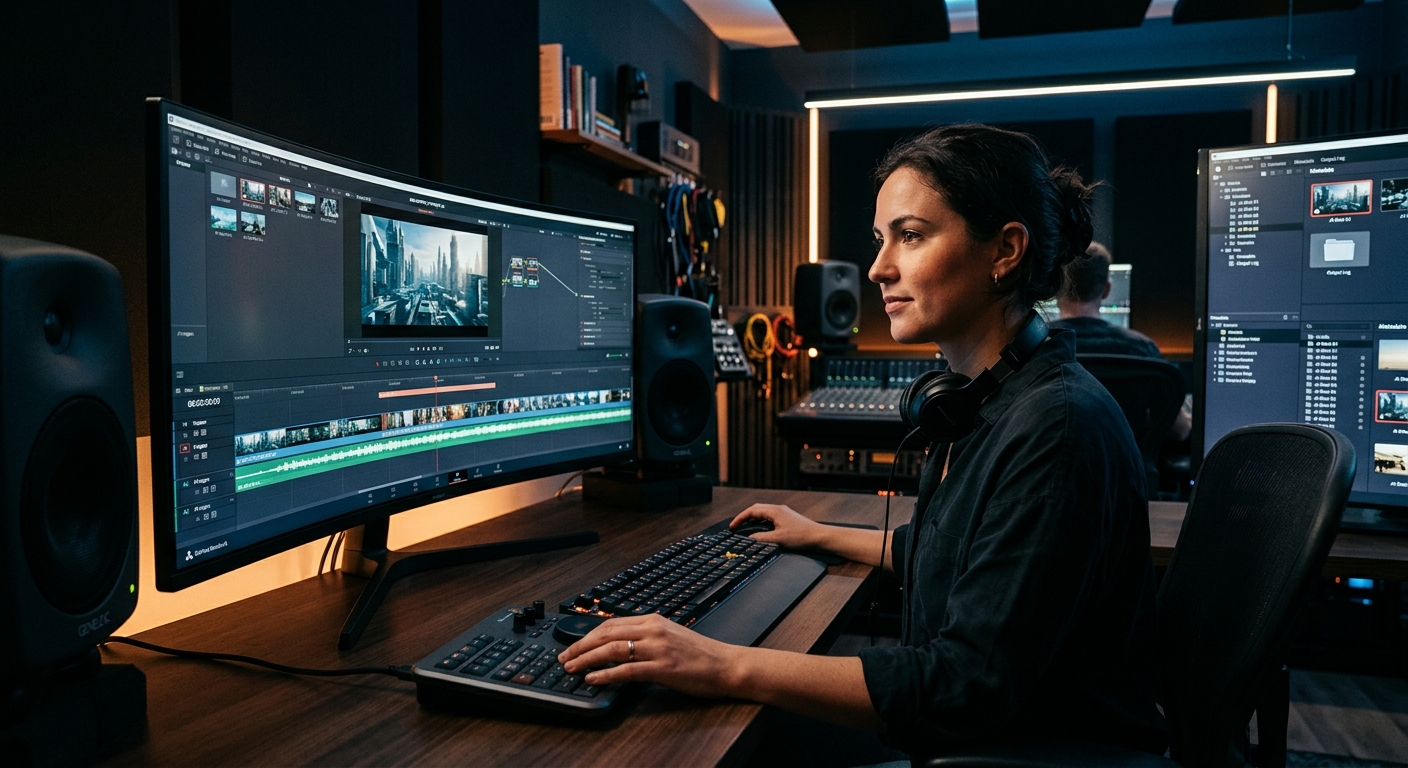
Before - Manual Process
- Editor watches full segments to find key moments
- Manual selection and clipping of highlights
- Writer pulls quotes by hand from rough transcripts
- Designer formats each asset individually
- Hours to days turnaround per piece of content
- Archive sits unused - too expensive to search
- Each video is a one-time cost, not a compounding asset
After - Video Intelligence Engine
- Every segment processed automatically on ingest
- Key moments detected and clipped in real time
- Speaker-labeled quotes extracted and indexed
- All assets generated with branded templates
- Minutes turnaround - ready before the next broadcast
- Entire archive searchable by speaker, topic, timestamp
- Every video compounds the value of your library
Who Uses a Video Intelligence Engine
TV Channels
Run a video intelligence engine on broadcast footage to produce social clips, searchable transcripts, and structured metadata within minutes of airing. The engine knows the channel's anchors, recurring segments, and brand templates - no configuration needed per video.
Event Organizers
Generate speaker kits the moment a session ends. Every talk becomes a package: clips of the best moments, pull quotes, a formatted session page, speaker-tagged metadata. Speakers get their assets before they leave the venue.
Podcast Networks
Turn your back catalog into a searchable knowledge base. A 500-episode archive stops being a storage cost and becomes a content asset - searchable by speaker, topic, timestamp, or quote across every episode ever recorded.
By the Numbers
20+
Years in Video
Deep broadcast and events expertise
10,000+
Hours Processed
Across TV, events, and podcasts
72hr
Proof of Concept
From your footage to working demo
Example
A broadcast network runs 14 hours of live programming per day. Without a video intelligence engine, producing social clips requires an editor to watch segments, manually select moments, cut clips, add captions, and format for each platform. Turnaround: hours to days.
With a video intelligence engine deployed in the network's environment, every segment is processed automatically. The engine identifies speakers, detects key moments, generates clips with branded captions, and delivers them to the social team's queue - within minutes of broadcast.
The same engine indexes every segment into a searchable archive. When a producer needs every appearance by a specific guest over the past two years, it's a search query - not a week of manual review.
Speechbox builds video intelligence engines this way: assembled from modular blocks, deployed inside the client's own infrastructure, and tuned to their specific content and brand rules.
Related Terms
- Video-to-Data - The core process a video intelligence engine performs: converting footage into structured, searchable information.
- Speaker Detection - One of the key capabilities within a video intelligence engine, identifying and tracking speakers across content.
- Data Sovereignty - The principle that your video data and outputs stay inside your environment. A video intelligence engine deployed on-prem or in your VPC supports this by design.
- Speaker Kit - A packaged set of assets (clips, quotes, session page) generated per speaker - a common output of a video intelligence engine used for events.
Related Questions
- What is an AI video analysis platform and how does it work?
- What is the best AI video processing software for production teams?
- How does automated video analysis software handle multi-speaker footage?
- What is video AI infrastructure for broadcast and events?
- What is the difference between generic AI video tools and a video intelligence engine?
- How do you process video at scale with AI?
- What is video-to-data?
- How does on-premise video AI differ from cloud-based tools?
- What is speaker detection in video?
- How do TV channels automate video clipping?
- What is a speaker kit for events?
- How do you make a podcast archive searchable?
Want to see how this works on your footage?
Let's connect