How Fast Should a Speaker Kit Be Delivered?
Sam
Content Writer, Speechbox
How Fast Should a Conference Speaker Kit Be Delivered After the Session?
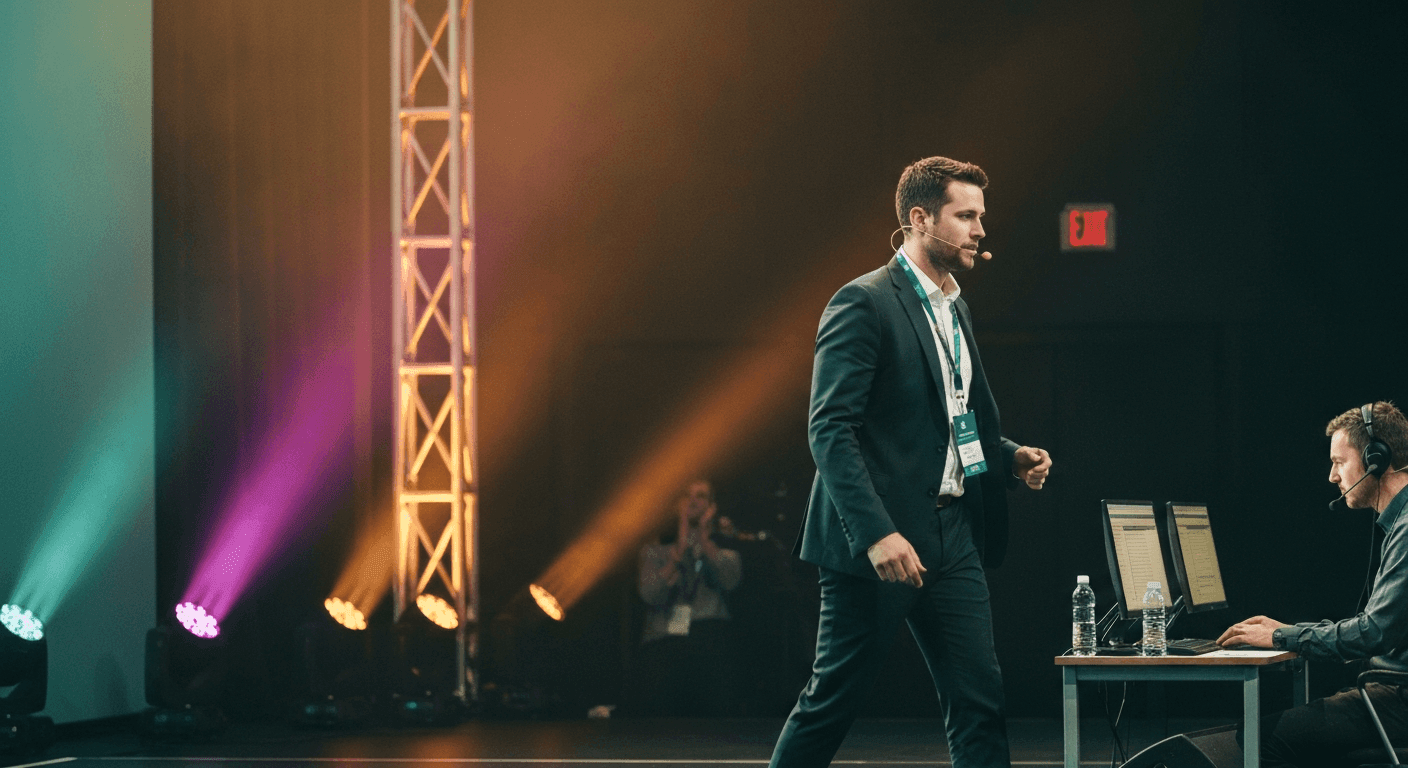
A conference speaker kit should arrive within 60 minutes of the session ending. At the Atlas Award ceremony at the Tel Aviv Stock Exchange this year, 10 honorees walked off the stage and into a complete kit each, before the room emptied. Two hours of stage content produced 10 Speaker Kits, 542 social-ready assets, and 138 live navigation titles streamed during the broadcast itself.
The standard "we will send you the recording in two to three weeks" is the failure mode that drains most of the kit value before the speaker ever sees it.
The reason is not preference. It is structural. The social attention window for a conference talk closes inside 48 hours, with peak interest in the first 12. A kit delivered into that window rides the speaker on the speaker network at peak attention. A kit delivered two weeks later competes against next month content, alongside an audience that no longer remembers the event.
Why the Window Is This Tight
Conference content lives on borrowed time. Three forces compress it.
The speaker network is peaking. Attendees, friends, and followers who saw the talk in person or watched live are still in the room mentally. They are looking for assets to share, screenshots to clip, quotes to retweet. The speaker has 48 hours to ride that wave. Then it is over.
Other speakers are posting. Every other speaker at the same event is also producing content. The first speakers to post win the most attention from the shared event audience. The third week recap reel competes against silence at best, and the next conference at worst.
Algorithmic surfacing decays sharply. LinkedIn, X, and YouTube weight recent content. A clip published on day one rides the algorithm freshness bias. A clip published on day fifteen does not. The same clip, identical in quality, reaches a fraction of the audience.
The kit is not a souvenir. It is a distribution asset with a hard expiration date.
The Three Time Tiers Speakers Actually Experience
Within 60 Minutes, Same Day
The speaker walks off stage, gets to the green room, and the kit is already in the inbox. Two to four clips, three to six quote cards, a recap paragraph, a dedicated speaker page URL. Ready to share before reaching the hotel lobby. Captures the peak attention window.
24 to 48 Hours, Late Same Cycle
The kit lands the next day. Still within the social attention window for most platforms. Conference messaging is still relevant in feeds. Speakers can still ride the post-event conversation. Acceptable second tier, but the conference is now late to its own moment.
One to Three Weeks, The Failure Mode
The default that most vendors quote. The social window is closed. Attendees have moved on to other events. The kit lands as a museum piece. The speaker uses it once, in a LinkedIn post that gets a fraction of the engagement it would have received on day one.
The cost difference between tier one and tier three is not about polish. It is about audience size. A tier-one kit reaches several multiples of a tier-three kit, even when the content inside is identical.

A 60-Minute Delivery in Practice
This is not theoretical. The Atlas Award is the annual recognition program for Israeli startups whose technology carries global weight - past honorees include Moovit, Augury, XTEND, UVeye, and Hailo. The 2026 ceremony at the Tel Aviv Stock Exchange ran for two hours and produced 10 Speaker Kits, 542 social-ready assets in Hebrew and English, and 138 live navigation titles streamed in real time during the broadcast itself. By the time the room emptied, every honoree had a personal asset library in hand. By the next morning, the partner channel (Israeli Business Channel) had a full content backlog to push from without waiting on post-production.
The pipeline that delivers that math has four phases inside a single event:
During the session. Transcript is generated in real time. Speaker is detected and tracked. Audio is cleaned. Key moments are flagged automatically based on audience reaction, speaker emphasis, and topical density. First-pass clip candidates and pull quotes are created continuously, not after the session ends.
Last 5 minutes of the session. Quote cards are rendered. Recap article first draft is written. Speaker page is populated with the embed, transcript, and chapter markers. Everything sits in a review queue.
Session ends. A human editor reviews the queue. Approves the strongest two to four clips. Picks the three to six quote cards that flatter the speaker rather than catch an awkward pause. Polishes the recap. Approves the speaker page.
Within 60 minutes of curtain. Approved kit is published to the speaker page and sent to the speaker via a single shareable URL. Ready to distribute.
This is not faster manual editing. It is a different pipeline architecture: AI handles the volume, humans handle the editorial judgment.
Why Most Vendors Cannot Deliver This
The 60-minute window is not a stretch goal that vendors can hit if they work harder. It is the consequence of a specific pipeline architecture, and it is impossible to retrofit onto a marketing-video agency. A vendor that quotes two weeks for a 30-session conference is not slow. They are running the wrong pipeline. Asking them to compress is asking the wrong question.
A marketing-video agency is structured around producing one polished output over weeks. Reviewing thirty rough cuts to ship four polished clips per session works at one-session scale. It fails at thirty-session scale.
The math at a 30-session conference: 90 to 150 clip candidates, 30 recap drafts, 30 speaker pages. With two manual editors, that is two weeks of post-production work. The Atlas Award math is even tighter: 10 honorees and 16 invited speakers in a two-hour show produced 542 finished social assets and 138 live navigation titles. Compressed into the duration of the event itself, the math only works if the first version of every asset is generated as the session is running and a human reviews rather than creates from scratch.
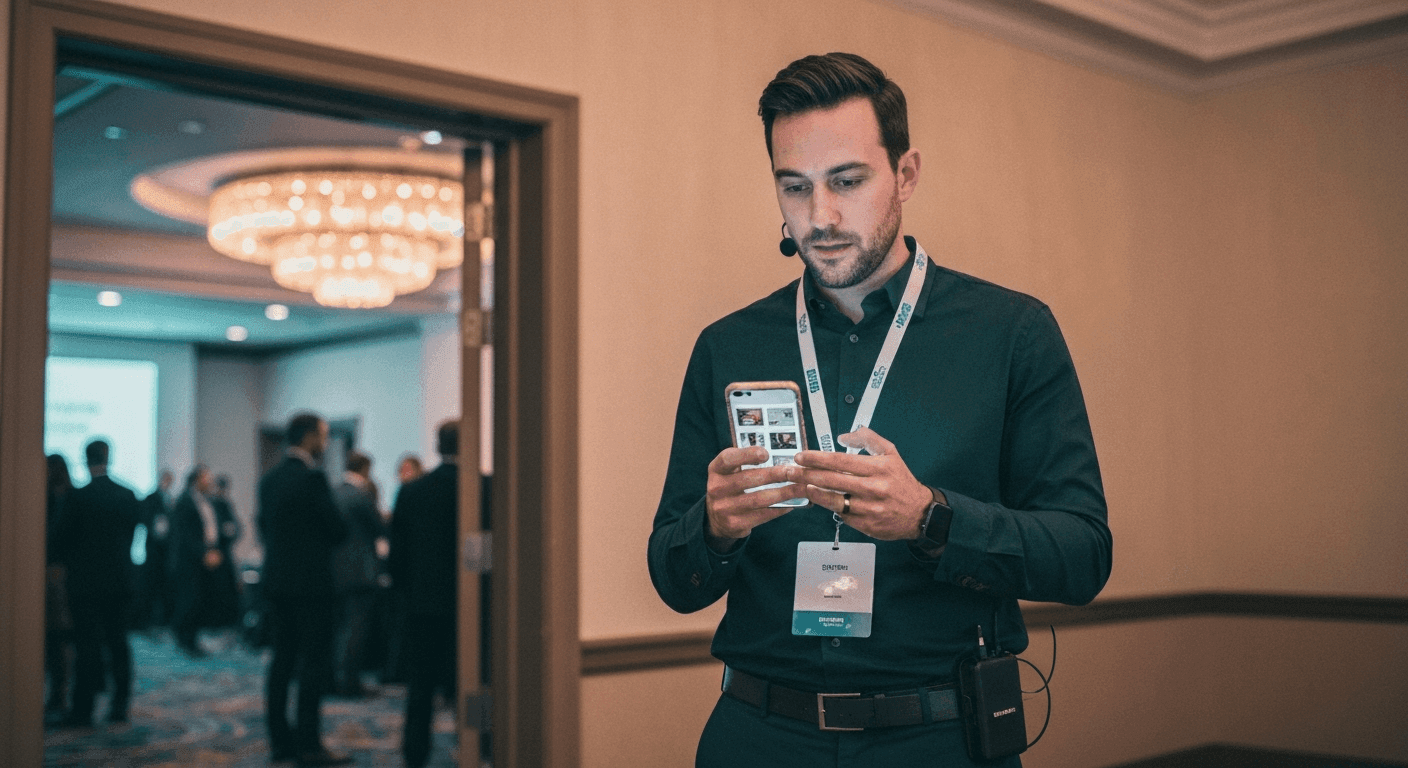
This is the structural reason same-day kits require a different production model. It is not a faster editor. It is a different role for the editor. The video team becomes editorial curators on a live conveyor, not craftspeople in a post-production suite.
What Conferences Should Demand in the Contract
Three contractual asks separate vendors built for same-day from vendors that quote week-plus delivery.
Red Flags in the Quote
- Delivery window stated in weeks, not hours
- No SLA on first-asset turnaround
- Per-session pricing with no volume break
- Cannot describe a live-event production day with named roles
- Asks the conference team to handle editorial selection
What Same-Day Vendors Quote
- First asset within 60 minutes of session end
- Full kit within 4 hours, hard SLA
- Dedicated producer and editor on site during the event
- Per-event pricing with included session ceiling
- Editorial selection inside the vendor, not the conference team
The contract language matters because the SLA is the only enforcement mechanism once the event begins. Verbal promises do not hold under the pressure of a live event running long.
The Cost of Getting This Wrong
Three downstream effects when kits arrive late.
Speakers stop promoting. A kit that lands fifteen days out reaches the speaker after they have moved on to the next thing. They post it once, maybe, with low energy. Distribution dies.
The conference loses the speaker advocacy layer. A timely kit is the strongest reason a speaker promotes the conference unprompted. A late kit removes that motivation. Next year the speaker remembers the event as the one that did not deliver.
Sponsors lose visibility. The sponsored placements baked into clips and quote cards depend on the clips actually circulating. A late kit means the sponsor placement was paid for but never seen. The renewal conversation suffers.
The right turnaround is not a luxury. It is the operating threshold that determines whether the speaker kit produces value at all.
Related Terms
- Speaker Kit - The full definition of what belongs in a conference speaker kit and why it exists.
- Speaker Kit Checklist - The 8 essentials plus quality bar for evaluating a kit.
- Live vs Post-Event Conference Content - The broader timing question across all conference content layers.
- Conference Content Repurposing - The end-to-end production model that makes same-day delivery possible.
Related Questions
- What should be in a conference speaker kit?
- How long does it take to produce a speaker kit?
- What is a reasonable turnaround time for conference content?
- Can AI produce conference speaker kits in real time?
- What happens if a speaker kit arrives after the social attention window closes?
- How do conferences shorten content turnaround from weeks to hours?
- What is the social attention window for a conference talk?
- What should a conference vendor commit to in the SLA?
Want to see how this works on your footage?
Let's connect