Live vs. Post-Event Conference Content
Sam
Content Writer, Speechbox

Live vs. Post-Event Conference Content - The Honest Answer
Post-event editing was the operating model for conference content for thirty years because there was no other option. The cameras shot the session, the footage went to an editor, the editor cut it down, the assets shipped two to six weeks later. That model produced beautiful craft and missed the audience.
Live conference content production is a different operating model. The capture, the asset assembly, and the human review happen during the event, with finished assets shipping in minutes to hours instead of weeks. It produces less individual craft per asset and far more compounding momentum across the conference.
The honest answer for most public conferences in 2026 is live with human review. The attention window closes within 48 hours. An asset that ships on day 14 enters a world that has already moved on.
Why Post-Event Editing Was the Norm
Post-event was not a choice. It was a constraint. Editing tools were slow. Transcription was manual. Multi-camera footage took hours to ingest. Color grading and brand templating required a dedicated suite. The only way to produce conference video was to send the cards home with the crew and wait.
That model produced legitimately good craft. A skilled editor with three weeks and a colorist made a 90-second highlight reel that looked like broadcast. The trade-off was invisible at the time because nobody had a faster alternative.
Post-Event Editing - What It Gets Right
- Craft on each individual asset
- Color grading and audio mastering quality
- Editorial pacing across long-form pieces
- Predictable workflow the team has run for years
- Trusted by broadcast partners and sponsors who expect polish
- No risk of a live mistake going public
Post-Event Editing - What It Costs
- Two to six weeks from session to first asset
- Audience attention window has closed by then
- Social and email distribution lose their peak moment
- Sponsors pay for visibility and get it months late
- Speakers ask where their video is for weeks
- Most events ship only a fraction of planned assets
The fundamental cost of post-event is not money. It is the gap between when the audience cares and when the asset arrives.
What "Live" Actually Means in Conference Content
Live conference content production is not auto-published unreviewed clips. It is a real-time pipeline with a producer and editor in the loop. The capture happens as the session is recorded. The transcription, speaker detection, moment scoring, and asset assembly run in parallel during the session. The producer reviews each output before publication. The asset ships within the same hour.
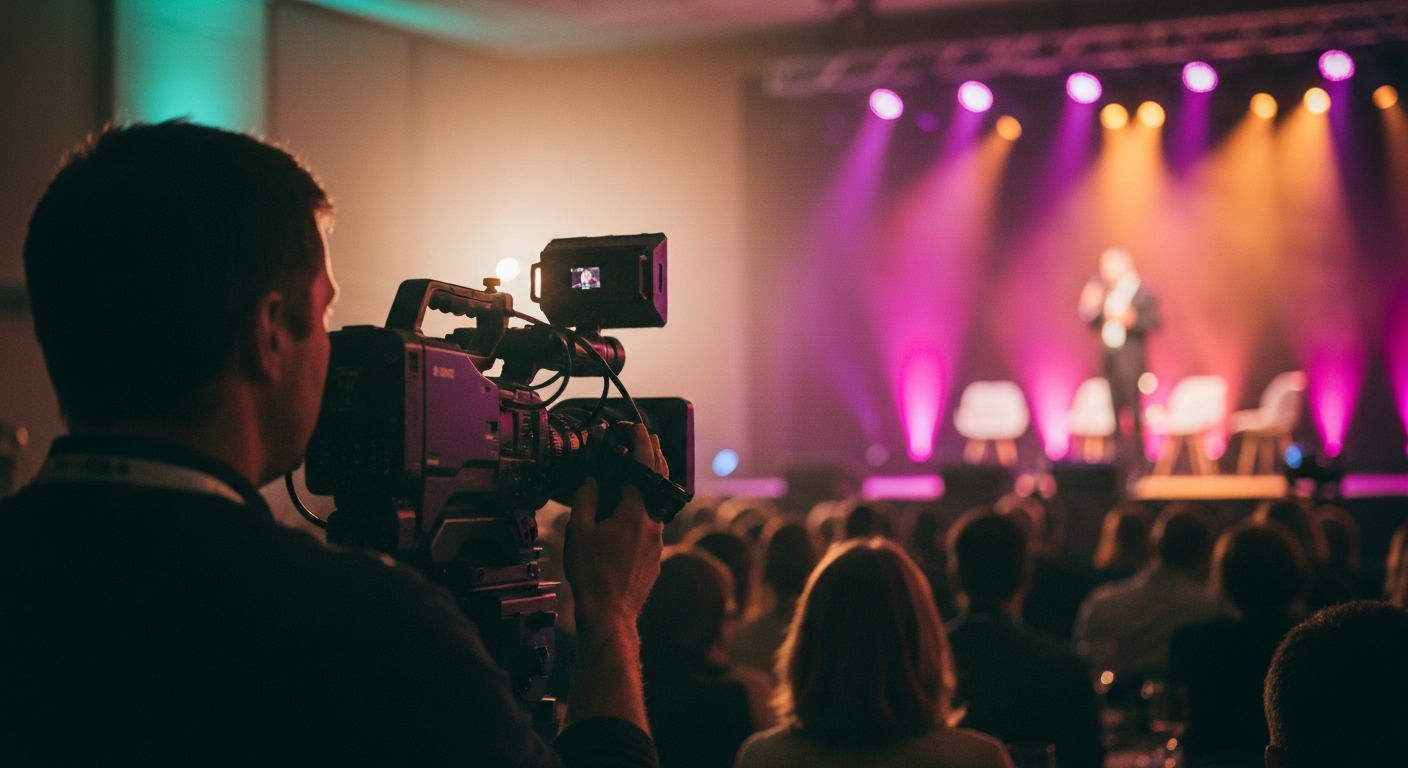
The capture model that makes this work is not a film crew shooting footage for later. It is a connected pipeline. Cameras feed the encoder. The encoder feeds the processing layer. The processing layer feeds the editor's queue. The editor approves, requests a re-cut, or replaces. The asset publishes to social, the speaker kit, the showroom, and the sponsor placement at the same time.
This is the model that conference organizers describe when they say they want content "while the conference is still happening". It is technically a hybrid of live broadcast workflow and asset production, which is why it does not exist in most editing tools and why it requires conference-specific infrastructure.
Where Post-Event Still Wins
Some conference content genuinely benefits from time. Long-form documentary cuts that weave multiple sessions into a 20-minute narrative. Cinematic recap films with custom music and motion graphics. Branded keynote releases timed for a product launch six weeks after the event. Anything where the craft is the point and the timing is secondary.
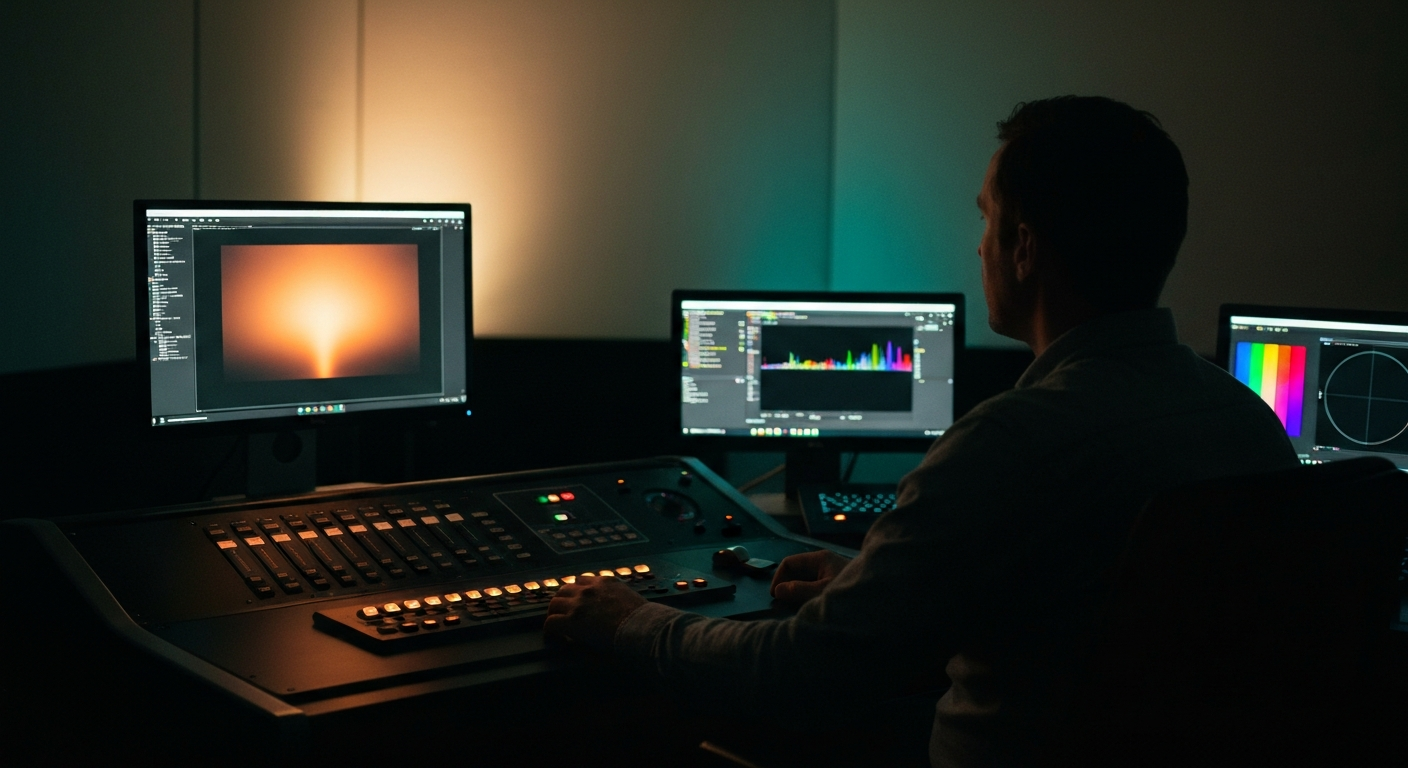
The post-event color suite, the dedicated audio session, the editorial review across multiple cuts - these produce assets that no live pipeline can match. For the small number of conference outputs where this matters, post-event is still the right model. The mistake is applying it to every output by default.
The Hybrid Reality Most Buyers Miss
The framing of "live or post-event" misses how a well-run conference content operation actually works. The 90 percent of conference assets that need to move fast (clips, speaker kits, quote cards, social posts, recap articles, sponsor placements) ship live with human review. The 10 percent that justify deeper craft (the documentary cut, the cinematic recap, the keynote release) ship post-event.
Live for High-Volume, High-Velocity Assets
Speaker clips, quote cards, social posts, speaker kits, recap articles, sponsor placements. The assets where speed determines whether anyone sees them. Live pipeline with producer review.
Post-Event for Showcase Pieces
Documentary cuts, cinematic recap films, branded keynote releases, sponsor co-produced features. The assets where extra craft compounds. Traditional editing workflow, scheduled deliverables.
One Team Runs Both
The same producer and editor pair that runs the live operation also brief the post-event team on which sessions deserve the deeper cut. The live data informs which moments are worth the craft investment.
Live Drives the Selection
The clips that perform best in the live window are the strongest candidates for the documentary cut. Live engagement is the signal post-event editing was missing for thirty years.
The conferences that operate this way deliver more total content, deliver it on time, and still produce the showcase pieces that the brand team wants. They do not pick one model. They run both, with the live pipeline as the default and post-event reserved for specific outputs.
When Live Pays Off the Most
Live conference content production pays off the most when at least one of these conditions is true.
Speaker Marketing Matters to You
Speakers want their video the day they speak, not the month after. A speaker kit delivered live becomes a LinkedIn post that night and a recruiting asset the following week. Delivered post-event, it becomes a forgotten email.
Sponsors Pay for Visibility
Sponsor logos and placements inside clips, the live feed, and the showroom only justify their price if anyone sees them. Live distribution captures the attention window. Post-event distribution shows up after sponsors have already filed the ROI report.
You Run Multiple Events Per Year
At one event per year, post-event timing is annoying. At four to twelve events per year, post-event timing means you are still editing event one when event three is happening. Live closes the loop.
Your Audience Is on Social
Conference audiences expect to see clips within hours, not weeks. Live delivery meets the audience where they are. Post-event delivery hopes they remember the conference when the assets finally arrive.
When Post-Event Is Right
Live is not the right answer for every event. Post-event remains the better model when the conference is internal-only with no public distribution, when the deliverable is a single long-form documentary rather than a wide asset bank, when the brand requires a level of craft per asset that only a dedicated suite can produce, or when the event is small enough that two to six weeks of editor time is not a constraint.
The internal company all-hands recorded for employees who could not attend does not need a live pipeline. The annual investor day with one tightly scripted keynote video and nothing else does not need a live pipeline. The boutique 50-person executive summit where the deliverable is a single 12-minute film does not need a live pipeline.
For most public conferences with 20 or more sessions and an audience that exists on social channels, the question is no longer whether to go live. It is which assets ship live and which assets ship post-event.
How to Choose Between Them
The decision usually comes down to four questions about the specific event.

First, when does the audience care. If the answer is "during and immediately after the event", live wins. If the answer is "whenever, this is evergreen", post-event is fine.
Second, how many assets does the conference need. One asset is post-event territory. Fifty assets is live territory. Five hundred assets is live, period.
Third, who is the asset for. Speakers, sponsors, and social audiences need live timing. Internal stakeholders, board reports, and recruiting libraries can wait.
Fourth, what is the brand tolerance for "good enough now" vs "great in six weeks". Live with human review is editorially solid but not broadcast-cinematic. If the brand requires broadcast-cinematic on every asset, the team is signing up for the cost and timing of post-event. Most brands, when forced to choose, pick "in front of the audience this week".
Speechbox and Live Delivery
Speechbox runs the live conference content production model as the default. The capture happens during the session. The transcription, asset assembly, and editorial review happen during and immediately after the session. A named producer and editor from our team work alongside the AI pipeline. Finished assets ship within the same hour.
For the small set of outputs where post-event craft is justified (documentary cuts, cinematic recap films), we coordinate the deeper edit using the data the live pipeline produced. Live delivery is not opposed to post-event craft. It is the operating layer that makes both possible.
Related Terms
- Conference Media Infrastructure - The full real-time stack that makes live delivery possible at conference scale.
- AI vs. Human Editor at Conferences - The companion question on who does the work. Live is about when. AI vs. human is about who.
- How Conferences Repurpose Session Content - The five repurposing surfaces. Live timing makes them land in the attention window.
- How to Evaluate a Conference Content Production Vendor - The buying guide. Live delivery is one of the ten criteria worth pressure-testing.
Related Questions
- What is conference media infrastructure?
- How fast can a speaker kit ship after a conference session?
- Why do post-event conference videos underperform on social?
- Should a conference run live and post-event production at the same time?
- What is the audience attention window for conference content?
- When is post-event editing still the right choice for a conference?
- How does live conference content production handle quality control?
- What does a live conference content team look like during the event?
Want to see how this works on your footage?
Let's connect