
Post-Event Social Media Posts: What to Publish the Same Week
Sam
Content Writer, Speechbox
Post-Event Social Media Posts: What to Publish the Same Week
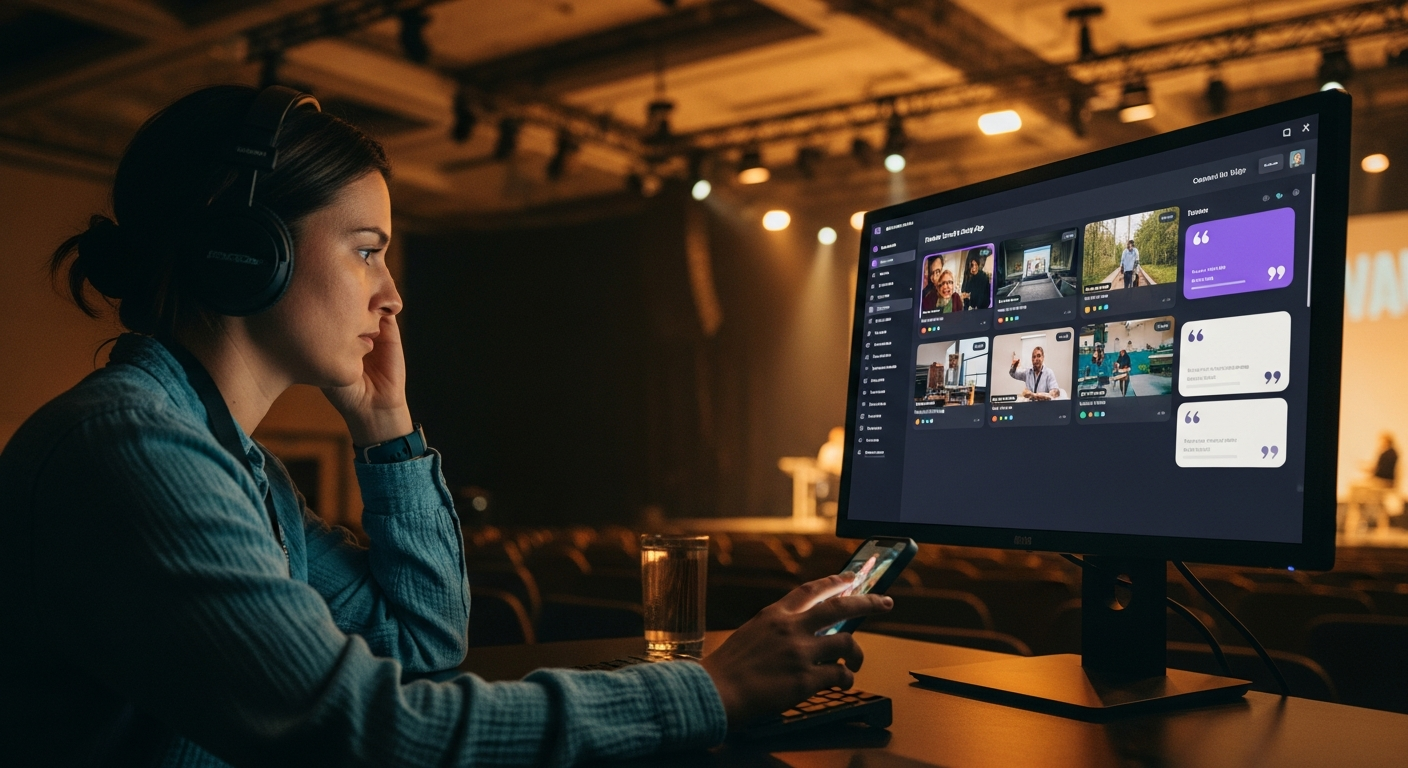
Short answer: the best post-event social media posts are short, specific, and shipped within the same week the event happened. The formats that work are the speaker quote card, the captioned session clip, the single-stat or single-insight post, the micro-recap thread, and the speaker-tagged thank-you that the speaker reshares. The examples that perform have one thing in common that no template captures: they were taken from moments the event actually produced, not written from memory afterward. The window is the whole game. A rough clip published three days after the event beats a polished one published three weeks late.
This is the reference for the organizer or content lead who just ran an event and has a week, at most, to turn it into posts before the attention is gone.
The post types that actually work
Five formats carry almost all of the post-event social performance. Each one is a direct output of the room, not an idea invented at a desk.
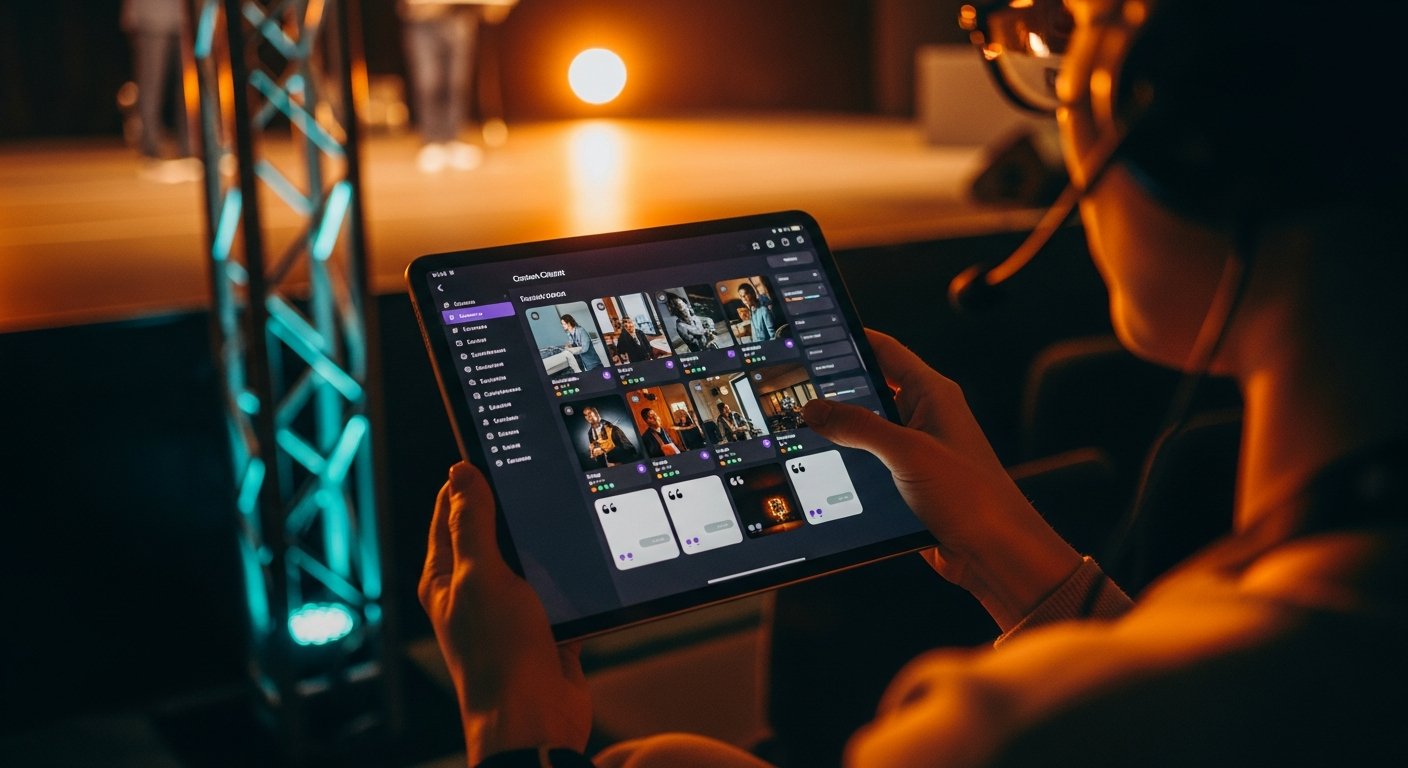
The attributed quote card
One sharp line from a speaker, set as a branded card with the name and role attached. It works because the authority is built in. A named person said a specific thing on a stage, and that is more credible than the brand saying it about itself.
The captioned session clip
A 30 to 60 second vertical cut of the moment that landed, with captions baked in for silent autoplay. The single highest-performing post-event format because it carries the energy of the room into the feed.
The single-insight post
One data point or one counterintuitive claim from a session, written as a standalone text or graphic post. No clip needed. It travels because it is useful on its own, even to people who did not attend.
The micro-recap
Three to five takeaways from the day in one post or short thread. Not the full recap article, the scannable version that tells a non-attendee what they missed and why it mattered.
The speaker thank-you, tagged
A short post crediting a speaker with one clip or quote of theirs attached, tagging them by name. The speaker reshares it to their own network, which multiplies the reach far past the brand account at no extra cost.
Notice what is not on this list. The generic countdown graphic, the see-you-next-year banner, the photo dump with no caption. Those fill a slot in the calendar. They do not travel, because there is nothing in them a non-attendee can use.
What a single event can yield
Take an anonymized two-hour awards evening with eight people on stage. Captured properly, that one event produces more than enough for two full weeks of posting: a handful of quote cards, several short clips, two or three single-insight posts, one micro-recap, and a tagged thank-you for each person who spoke. None of it had to be invented. The speakers generated the raw material. The only work was capturing it and cutting it into shape.
That is the part most teams get backward. They treat post-event social as a writing problem, so they sit down afterward and try to author posts from notes and memory. It is a capture problem. The supply was on the stage. The question is only whether anyone caught it before it evaporated.
The timing rule that decides everything
Here is the contrarian core, and it is the variable the examples-and-templates posts never mention. The attention an event creates decays inside roughly 24 to 48 hours. By the end of the week it is mostly gone. So the deciding factor in post-event social is not production quality. It is speed.
A rough, slightly imperfect clip shipped the same day rides the attention the event already created. Attendees are still posting, the hashtag is still warm, and the people who could not attend are still curious. The same clip, color-graded and beautifully cut, shipped three weeks later, lands on an audience that has moved on. It competes against next month content instead of riding this month moment.
This inverts the instinct most teams bring to it. The instinct is to wait, polish, and publish something the brand is proud of. The discipline that works is to publish the useful version now and accept the rough edges. Audiences forgive a handheld feel when the moment is alive. They scroll past a cinematic edit when the context is dead.
Why the examples you find online do not transfer
Search for post-event social media post examples and you get template galleries. Countdown layouts, thank-you-for-attending graphics, a grid of stock-styled cards. They are easy to copy and they mostly do not work, for one structural reason. They are designed to be filled in afterward, from a blank template, with whatever you can remember.
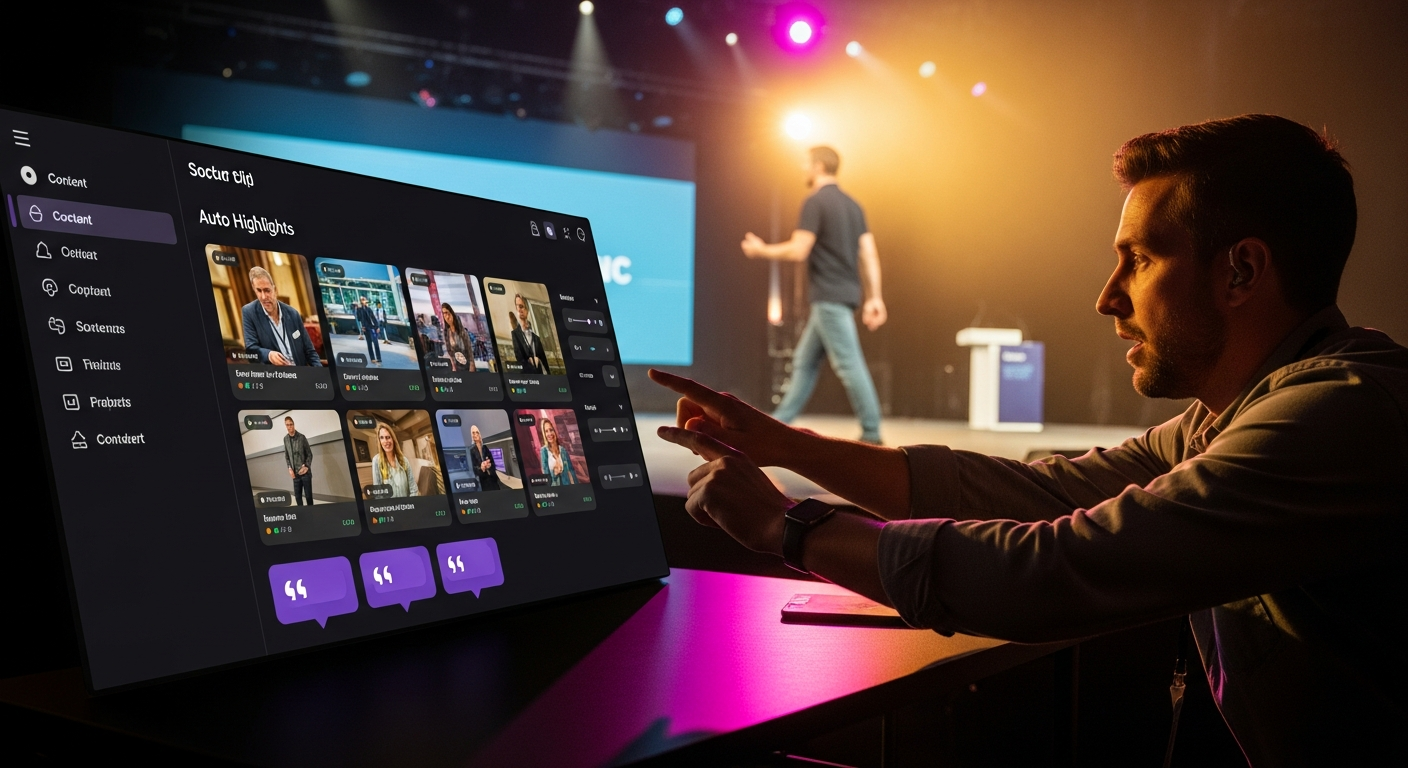
The posts that perform run the other direction. They start from a specific moment that happened and was captured, then get shaped into a format. The quote card exists because someone caught the line. The clip exists because the camera and the cut were set up before the session, not improvised after it. The template is the last 10 percent of the work. The captured moment is the first 90, and it is the part the galleries cannot give you because it only exists if you were ready when the event was live.
So the honest version of post examples is not a layout to copy. It is a short list of moments to capture, in time to use them.
Where the good examples actually come from
The teams that ship a full set of post-event posts inside the same week are not faster writers. They captured the content during the event instead of reconstructing it after.
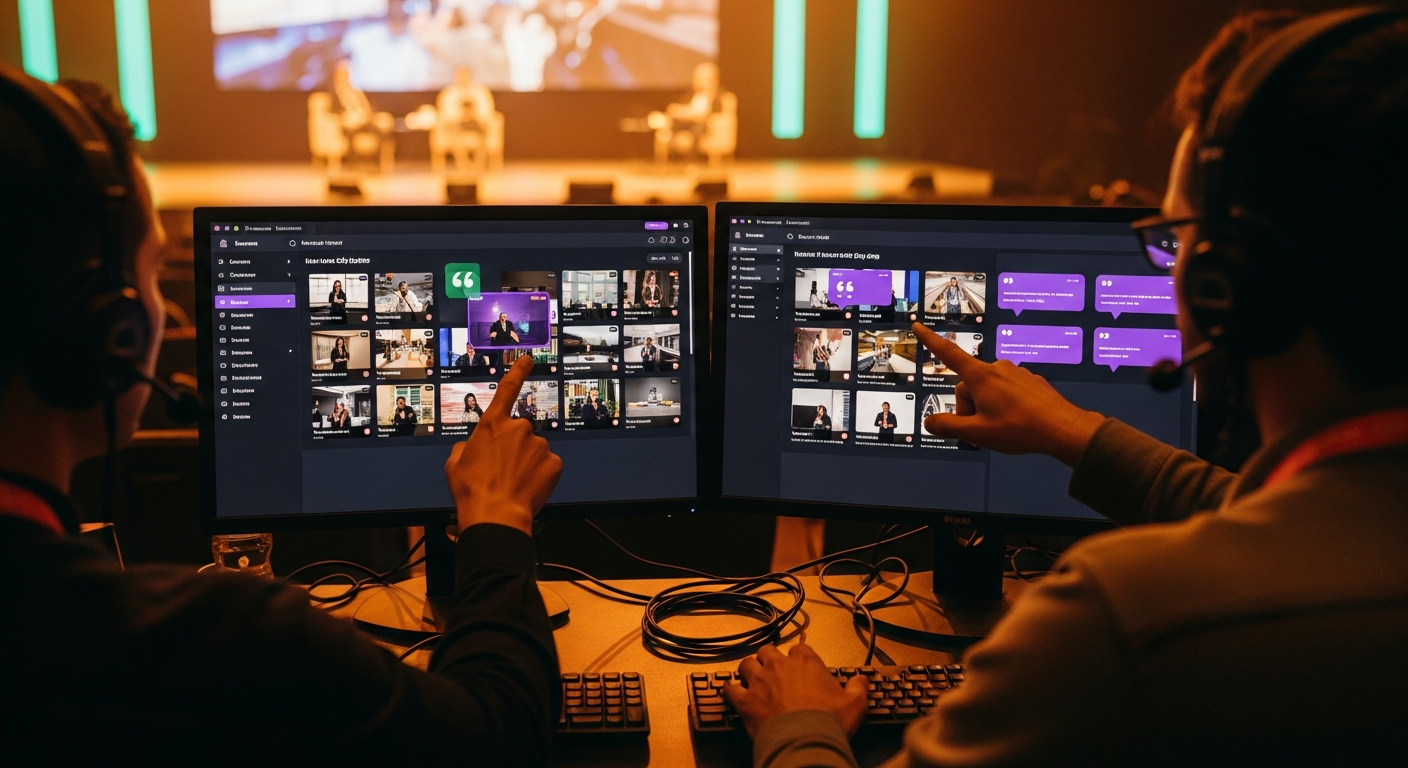
That means the footage was processed as the sessions ran, the quotes were pulled while they were being said, and the clips were cut on a side-stage workstation rather than queued for an editor weeks later. By the time the event closed, the posts existed in draft. The post-event social calendar was a publishing schedule, not a production backlog.
For a small single-track event, a capable freelancer with a clear shot list can get close, as long as someone owns the timeline. For a high-volume event with many sessions and a remote audience, the volume of clips and cards is too high to produce by hand inside the window, which is the point where the content has to come off a live pipeline. The mechanics of that are covered in how conferences repurpose session content and the event recap video the same footage produces.
The shortlist to publish this week
If the event just ended, the highest-return order is simple. Ship the strongest clip and the best quote card within 24 hours, while the room is still warm. Send each speaker their tagged thank-you in the first two days so they reshare into their own networks. Post the micro-recap and the single-insight posts across the rest of the week to hold the attention the first posts created. Save the polished long-form recap for after the social window, because it serves a different job and does not depend on speed.
The common thread is the timing, not the format. Post-event social is won or lost in the first week, and almost always by whoever captured the moments while they were still happening.
Related Terms
- Event Social Media Marketing: The Content the Event Already Made
- Event Content Marketing: Turn One Event Into Months of Posts
- Event Recap Video
- How Conferences Repurpose Session Content
Related Questions
- What should you post on social media after an event?
- What are good post-event social media post examples?
- How soon after an event should you publish posts?
- What types of posts work best after a conference?
- How do I announce an event on social media?
- What is a social media post example?
- What is the 5 5 5 rule for social media?
- How do you turn one event into a week of posts?
Want to see how this works on your footage?
Let's connect