The Four Pillars of Conference Infrastructure
Sam
Content Writer, Speechbox
The Four Pillars of Conference Infrastructure
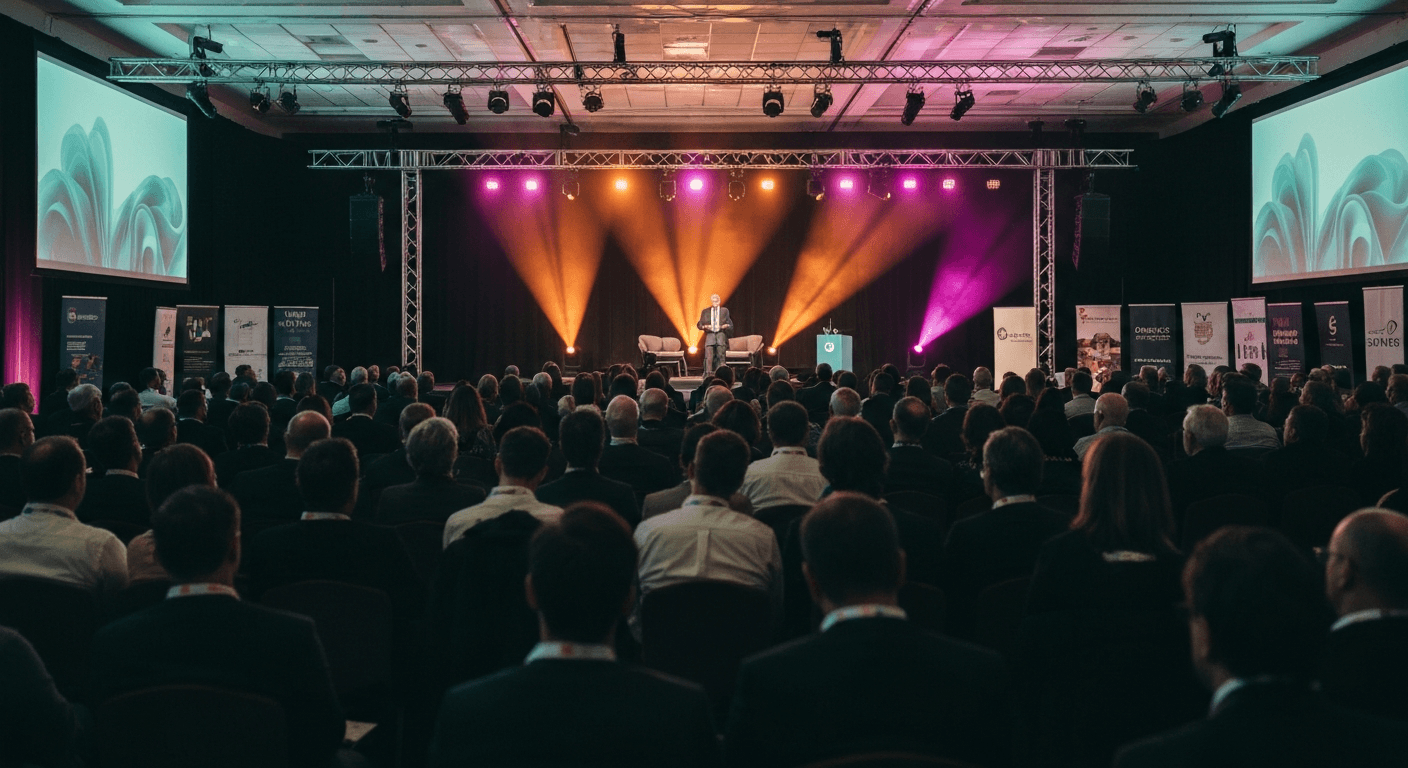
Short answer: conference infrastructure rests on four pillars. Videos, speakers, attendees, sponsors. Most conferences treat each one as a separate workstream owned by a separate team. The pattern that breaks the economics of the event is the same one every time: each pillar is perishable in isolation, and each pillar feeds the other three when connected. The infrastructure layer is what does the connecting.
This is the framework conference organizers use to decide what to produce, who is responsible for which output, and what the post-event window actually delivers.
The Four Pillars
Videos
Every session recording, every backstage interview, every B-roll cutaway. The raw material of the event. The largest asset on the conference balance sheet, and the one most often left to depreciate.
Speakers
The people whose presence justifies the ticket price. The ones whose networks pre-publish the event to their followers, and who carry the conference message past the venue when they leave the stage.
Attendees
The audience inside the room and the audience that watches remotely. Their attention is the product the conference sells to sponsors, the network it sells to speakers, and the renewal driver it sells to itself.
Sponsors
The budget line that makes the economics work. The buyers who pay for visibility in front of the attendee base, who measure that visibility in metrics their CFO will accept, and who renew or walk based on that measurement.
Why Each Pillar Decays in Isolation
The default operating model at most conferences keeps the four pillars in separate boxes. The video team captures sessions. The speaker liaison team manages the talent. The attendee experience team runs the room. The sponsor team handles partner logistics. Each team optimizes for its own deliverable and hands it off when the event closes.
That is where the decay happens.
Videos in isolation. Session recordings sit on a YouTube channel nobody navigates. The full keynote gets 200 views. The clip that mattered, the 90 seconds where the speaker said something quotable, is buried inside a 50-minute file with no chapter markers. The asset exists, but it cannot be found, cannot be cited, cannot be repurposed at scale.
Speakers in isolation. Speakers walk off the stage with nothing in their hand. By the time the conference team edits and ships a highlight reel two weeks later, the speaker has already moved on to the next event. The amplification window that should have lit up their network closed while the production team was still rendering.
Attendees in isolation. The room sees the session live. The remote viewers scrub through a recording without speaker names, without topic markers, without anything to navigate by. The attendee who paid $3,000 for the ticket has no asset they can return to a week later when their CFO asks what they got out of the trip.
Sponsors in isolation. Sponsors get three days of foot traffic at a booth and a logo on the program. When the venue empties, the visibility ends. By Q1 of the following year, the CFO asks what the $40,000 produced. The sponsor cannot answer in a sentence, and the renewal conversation turns into a defense.
Each of those failures looks like a different problem. They are the same problem. The pillars are not connected.

How Each Pillar Feeds the Other Three When Connected
Now the same four pillars under an infrastructure layer that connects them.
The video stream becomes the spine. Every session is transcribed, segmented, and indexed in real time during the event itself. That single processing layer feeds the other three pillars at the same time.
Videos feed speakers. The moment a speaker walks off stage, their best segments are already cut, captioned, and packaged into a personal kit they share with their network within the hour. The speaker amplification window stays open.
Videos feed attendees. Live navigation titles let remote viewers jump to the exact moment they want while the broadcast is still airing. The post-event showroom turns the conference into a searchable destination instead of a 14-hour passive playlist. Attendees keep returning. Renewal next year is easier to justify.
Videos feed sponsors. Branded clips, sponsor-anchored showroom sections, and measurable visibility that compounds for 6 to 12 months past the event change the sponsor measurement conversation. The sponsor has the evidence their CFO needed, generated automatically from the same video spine the rest of the event is running on.
Speakers, attendees, and sponsors each connect back to videos. Each also connects to the other two. A speaker's clip lands in front of an attendee who returns to the showroom and sees a sponsor module attached to the segment. A sponsor pulls a quote from a speaker's session and pushes it on their own channel, bringing new attendee leads into the audience pool. The four pillars stop being four content tracks and become one operating system with four output surfaces.
Video Spine
Live processing of session content
Speakers
Personal kits within the hour
Attendees
Navigation and showroom access
Sponsors
Visibility evidence past the event
Video Spine
Live processing of session content
Speakers
Personal kits within the hour
Attendees
Navigation and showroom access
Sponsors
Visibility evidence past the event
What This Looks Like in Practice
The 2026 Atlas Award ceremony at the Tel Aviv Stock Exchange is the cleanest recent example of the four pillars running under one infrastructure layer. The ceremony is the annual recognition program for Israeli companies whose technology carries global weight, run in partnership with Israeli Business Channel, the country's leading business news network. The 2026 edition featured 16 invited speakers and 20 award nominees in front of an audience spanning policy, venture, and industry.
The event ran for two hours. By the time the lights came up, the ceremony had produced 138 live navigation titles streamed during the event in real time, 10 personalized Speaker Kits delivered to honorees before the room emptied, and 542 social-ready assets queued for the partner channel and the honored companies to push out while the ceremony was still trending.
The team that ran the production layer was Speechbox. The point worth holding onto is not the vendor. The point is that the four pillars were a single operation. The speakers received their kits because the video spine had already processed every segment in real time. The attendees navigated the broadcast in real time because the same video spine had produced 138 titles in two hours. The sponsor partner had a 542-asset library to push because the same spine that fed the kits and the navigation also fed the asset bank. One infrastructure, four output surfaces.
The deeper shift was upstream. The Atlas Award team stopped budgeting for a multi-week post-production cycle. The ceremony itself became the production. Everything after the ceremony was distribution.

The Contrarian Position
The infrastructure layer is not a production team. It is not a single tool, not an AV setup, not an editing vendor. It is the connective layer that ties the video spine to the speaker kit, the attendee navigation, and the sponsor visibility module at the same time.
That distinction matters because traditional event production is built to optimize each pillar separately. A bigger video team produces better videos. A bigger speaker liaison team makes the speakers happier. A bigger sponsor team renews more sponsors. None of those investments connect the pillars to each other. Each one solves one box and leaves the others untouched.
Infrastructure connects the boxes. The investment is not in a fifth team layered on top of the four. The investment is in the connective layer that lets the four teams operate against one source of truth, generated live during the event and routed automatically to the surface where each pillar consumes it.
The conferences that figure this out run leaner and ship more. The ones that do not keep hiring against each pillar in isolation and wonder why the post-event window keeps producing thinner outputs every year.
How to Know if Your Infrastructure Is Connecting the Pillars
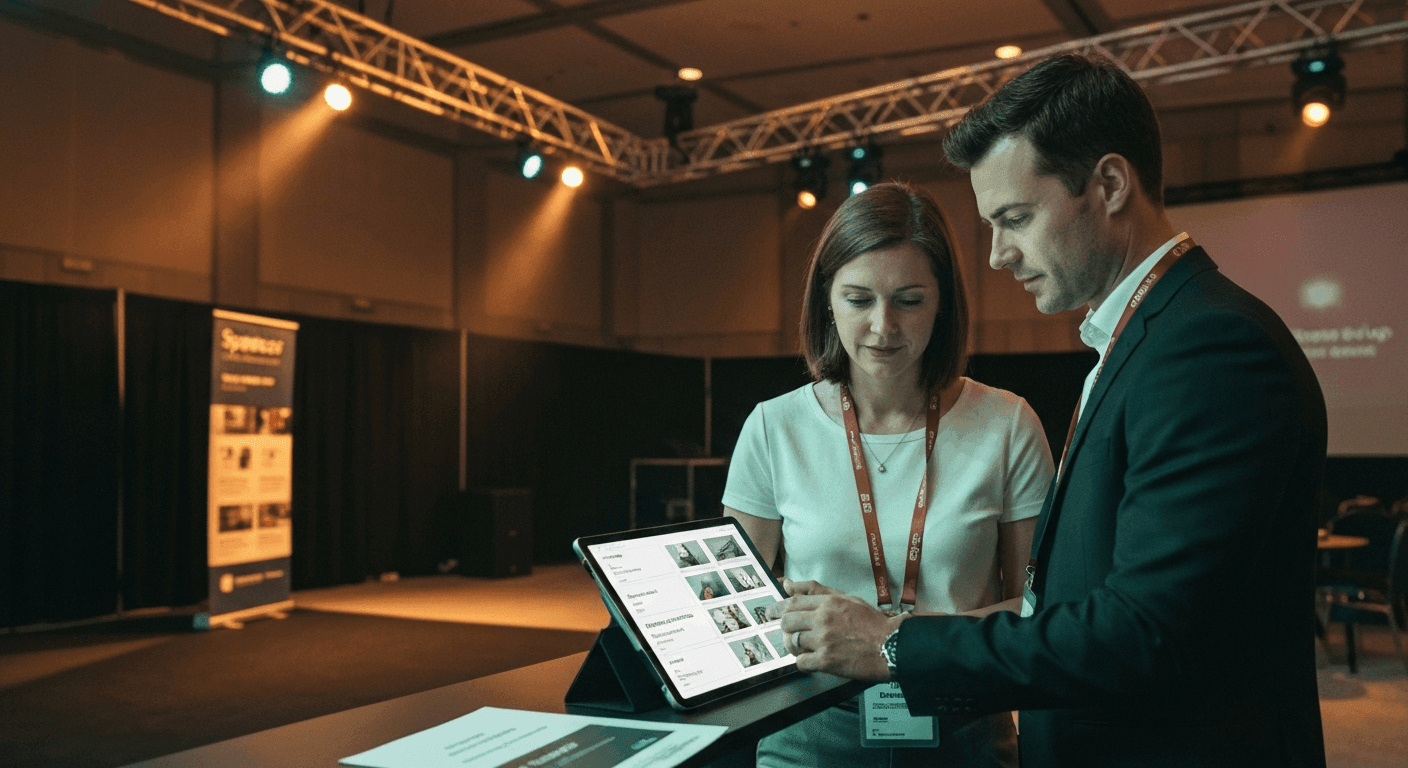
Five questions an organizer can answer in a single planning meeting to surface whether the four pillars are connected or running in separate boxes.
Speaker delivery time
How long after a speaker walks off the stage does their personalized kit reach their hand. If the answer is days, the video spine is not connected to the speaker pillar.
Attendee navigation
How does a remote attendee jump to the moment they want without scrubbing the timeline. If the answer is they cannot, the video spine is not connected to the attendee pillar.
Sponsor measurement
What evidence does a sponsor receive that their visibility produced a measurable result, and when does that evidence arrive. If the answer is a screenshot of booth foot traffic three weeks later, the video spine is not connected to the sponsor pillar.
Output velocity
How many social-ready assets are produced per hour of session content, and how many are ready inside the trending window. If the answer is dozens over weeks instead of hundreds the same evening, the four pillars are not running under one operation.
The fifth question is the one that decides whether the infrastructure is built or whether it still needs to be. Who owns the operating layer that connects videos, speakers, attendees, sponsors. If the answer is four different teams with four different deliverables, the connective layer does not exist yet.
That is the gap conference media infrastructure fills.
Related Terms
- What Is Conference Media Infrastructure?
- What Is a Speaker Kit?
- What Is a Conference Showroom?
- How Sponsors Get Visibility After a Conference
- Why Conference Sponsors Don't Renew
Related Questions
- What are the four pillars of conference infrastructure?
- Why is connecting the four pillars better than improving each one separately?
- Which pillar is the most important to connect first?
- How is conference infrastructure different from event marketing automation?
- Do I need to replace my existing video production team to adopt conference infrastructure?
- What does conference infrastructure cost compared to building it in-house?
- How do I measure whether my conference infrastructure is actually working?
Want to see how this works on your footage?
Let's connect